Graph of Uniform Sinusoidal with Directi
Introduction
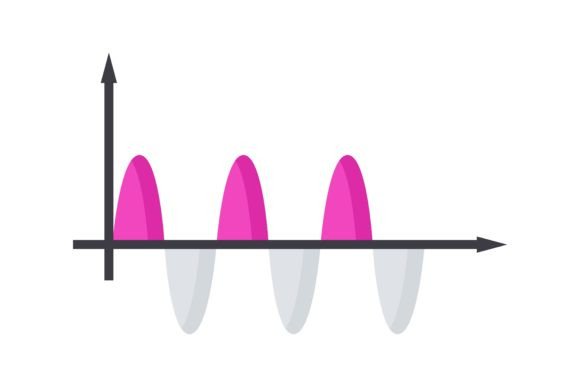
When you look at the graph of a uniform sinusoidal wave, you’re actually seeing a visual representation of one of the most fundamental patterns in physics and engineering. This review dives deep into how the direction of motion vector is displayed on the graph, the essential mathematics equipment used in isolated experiments on a pristine white background, and why this concept is a cornerstone for physics, science, and education.
What Is a Uniform Sinusoidal Graph?
A uniform sinusoidal graph depicts a wave that maintains a constant amplitude, frequency, and phase shift over time. It’s the mathematical backbone of sound waves, light waves, alternating current, and countless other physical phenomena. The graph’s smooth, repeating curve makes it an ideal tool for visualizing the periodic nature of oscillations.
Direction of Motion Vector
- Vector Representation: On the graph, the direction of motion is indicated by an arrow that points along the tangent to the curve. This arrow shows the instantaneous direction of particle displacement.
- Phase Correlation: The arrow’s orientation corresponds directly to the phase of the sinusoid. As the wave progresses, the vector rotates, illustrating the cyclical change in direction.
- Practical Interpretation: In mechanical vibrations, this vector helps students relate the mathematical model to real‑world motion—like a pendulum swinging or a tuning fork vibrating.
Mathematics Equipment for Experiments
- Oscilloscopes: Capture the sinusoidal waveform in real time, revealing amplitude and phase shift with high precision.
- Function Generators: Provide a clean sinusoidal input signal that can be varied in frequency and amplitude.
- Data Logging Software: Records the waveform for later analysis, allowing students to plot the graph on a white background for clarity.
- Vector Analyzers: Display the direction of motion vector alongside the waveform, bridging the gap between theory and visual comprehension.
Why This Graph Matters in Physics & Education
- 🔬 Conceptual Clarity: The graph visually reinforces the idea of periodicity, making abstract math tangible for learners.
- 📚 Curriculum Alignment: It aligns with standards for physics, engineering, and mathematics, helping teachers deliver integrated lessons.
- 🧪 Experimentation: Students can manipulate the generator’s frequency and measure the resulting waveform, reinforcing the link between equations and real data.
📚 You Might Also Like



Commercial License Included